



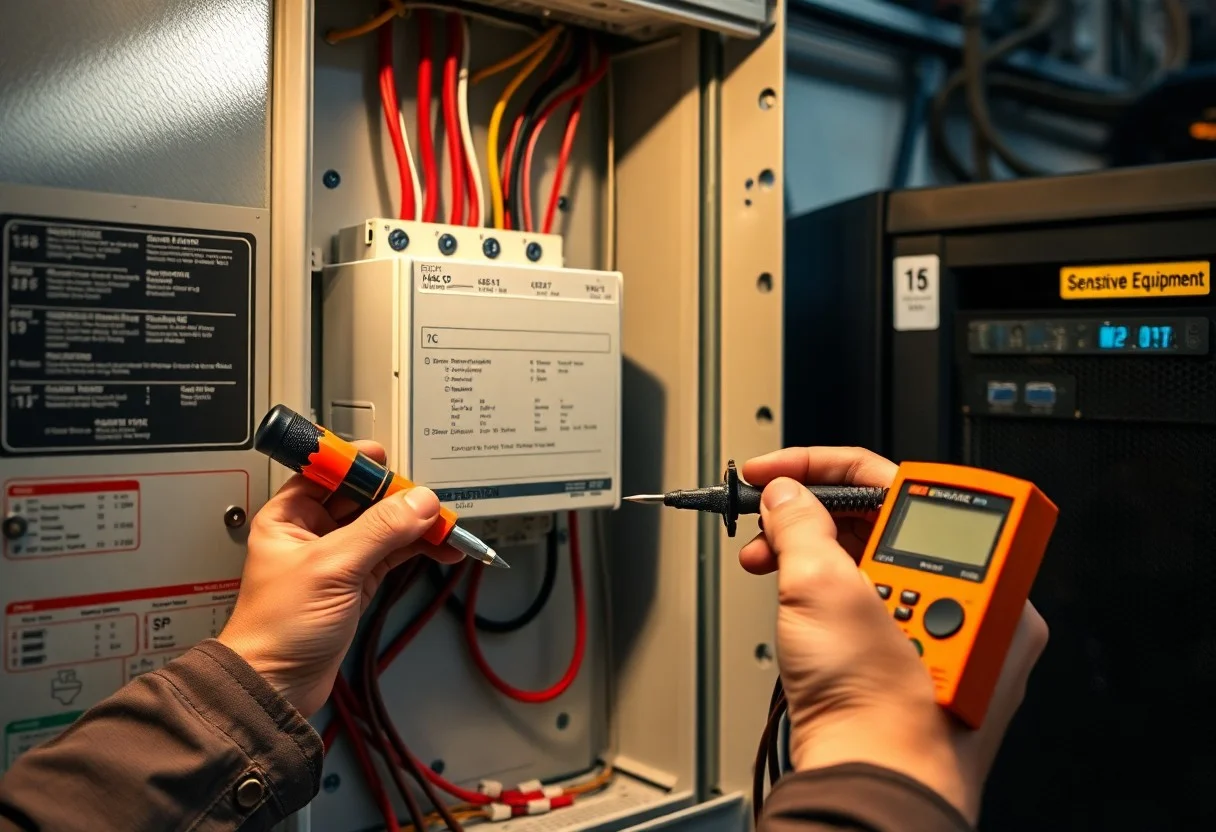

It’s important that you implement targeted maintenance, right-size your UPS, control ambient conditions, schedule periodic load and battery testing, and keep firmware and monitoring systems updated to optimize uptime and extend service life. You should track battery health, harmonics, and load profiles, and adopt energy-efficient modes without compromising redundancy. Following these five proven steps reduces failures, lowers operating costs, and maximizes lifecycle value for your data center.
Key Takeaways:
- Right-size UPS capacity and redundancy – calculate peak and runtime needs, allow headroom for growth, and choose the most efficient operating point and topology (N+1, 2N, etc.).
- Proactive battery management – control temperature, monitor state-of-health, run periodic discharge/impedance tests, and replace batteries on a lifecycle schedule with spares available.
- Regular preventive maintenance and testing – perform load-bank tests, transfer switch exercises, capacitor and contact inspections, cleaning, and timely firmware updates to prevent failures.
- Continuous monitoring and integration – deploy SNMP/telemetry, alarms, and DCIM analytics for real-time health, event logging, and predictive maintenance to reduce downtime and optimize performance.
- Optimize power quality and environment – correct power factor, mitigate harmonics, balance loads, and improve cooling/airflow and placement to reduce losses and extend UPS lifespan.
Understanding UPS Systems
You evaluate a UPS by its conversion efficiency (typically 95-98% for online units), battery runtime in minutes at full load (common ranges 10-30 min for data-center banking), and MTBF values (50,000-100,000 hours for modern modular designs). You track load factor, total harmonic distortion (THD), and ambient temperature, since each 10°C rise can cut battery life roughly in half; plan service intervals and capacity margins accordingly.
- Measure runtime at typical load, not nameplate capacity.
- Log inverter efficiency and ambient temp trends monthly.
- Assume that you size UPS capacity at least 20% above peak IT draw.
- Compare lifecycle cost, not just upfront price.
- Verify vendor MTTR and spare-module availability for your SLA.
- Assume that battery replacement cycles and preventive maintenance must be budgeted into TCO.