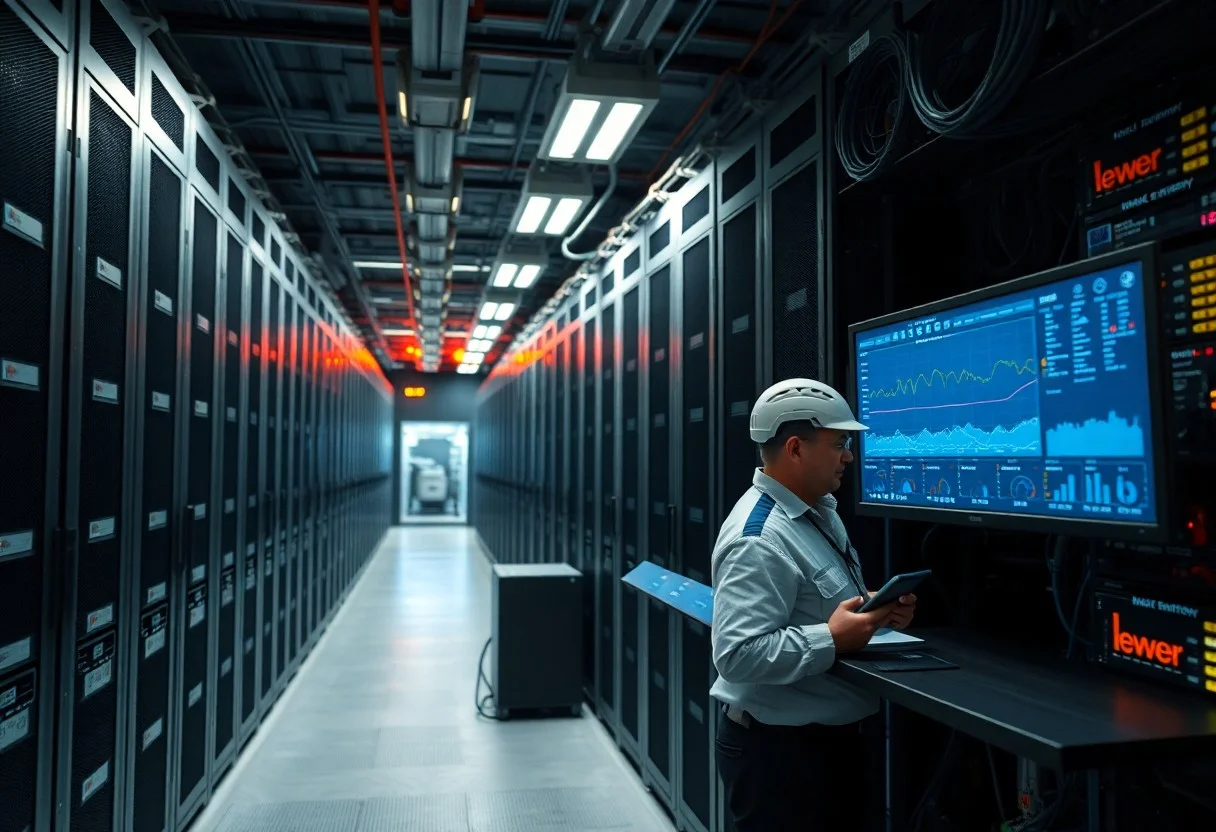



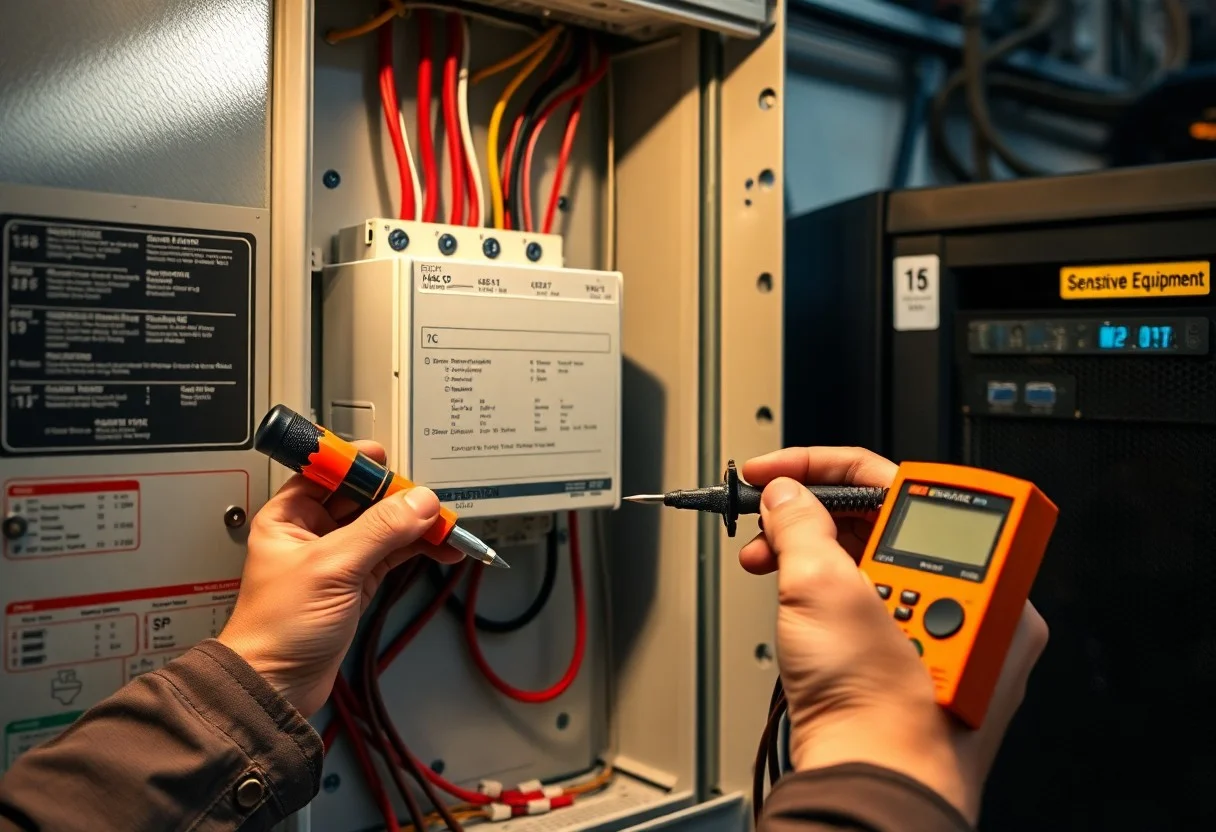
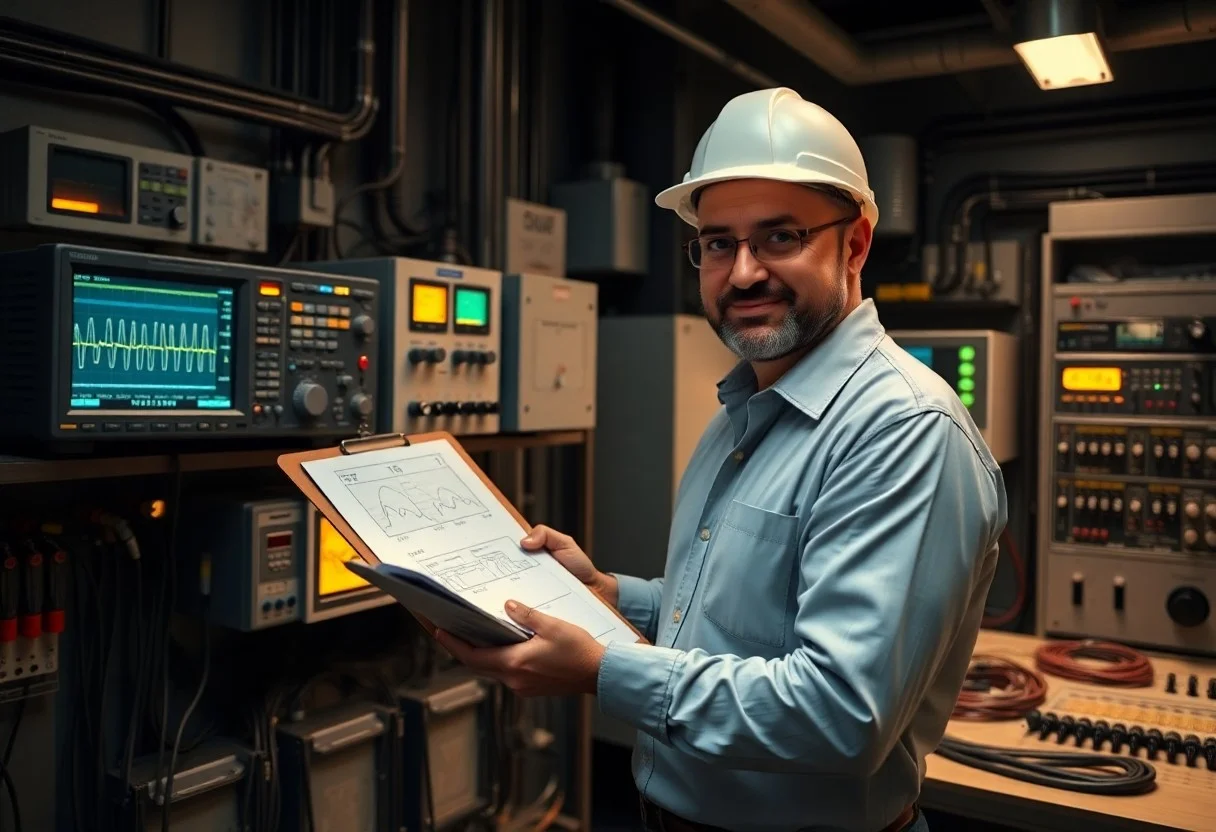
Diagnosis begins by systematically identifying harmonic sources and measuring distortion so you can prioritize fixes; in this post you’ll get seven practical steps to locate offending loads, use appropriate metering, interpret spectra, apply filtering or tuning, verify mitigation, and implement preventive practices to reduce equipment stress and regulatory noncompliance while optimizing power quality for your facility.
Key Takeaways:
- Begin with systematic measurements: capture waveforms and record THD and individual harmonic magnitudes using true-RMS power quality meters under representative load conditions.
- Identify and locate harmonic sources: target nonlinear loads (VFDs, UPS, rectifiers) and points where multiple harmonic-producing devices interact.
- Assess system impedance and resonance: perform frequency-domain impedance checks or sweeps to detect resonance near dominant harmonic orders.
- Apply a prioritized mitigation strategy: reduce emissions at the source, add tuned or active filters, detune resonance, or use phase-shifting transformers and load redistribution.
- Verify results and maintain compliance: retest after mitigation, document harmonic reductions, ensure IEEE 519/local limit compliance, and implement ongoing monitoring and maintenance.
Understanding Harmonics
Definition and Causes
When your nonlinear equipment operates, it draws current that contains integer multiples of the 50/60 Hz fundamental (3rd, 5th, 7th, etc.), produced by switching, rectification, magnetic saturation, or arcing. You will see harmonics originate from VFDs, UPS systems, LED drivers and large diode bridges; they distort waveform, raise neutral currents, heat transformers, and can misoperate sensitive protection. Typical industrial sites report 3rd and 5th harmonics as the dominant contributors.
- Common sources: VFDs, UPS, LED drivers.
- Measured with FFT analyzers and true-RMS meters.
- Any nonlinear load with high switching frequency injects harmonics into your system.
| What | Integer multiples of fundamental (3rd, 5th, 7th) |
| Causes | Rectifiers, switching supplies, magnetic saturation, arcing |
| Typical orders | 3rd, 5th, 7th dominate; triplen harmonics sum in neutral |
| Measurement | FFT spectrum, THD (voltage/current), per IEEE 519 limits |
| Effects | Overheating, misoperation, increased losses, nuisance tripping |
Types of Harmonics
You need to distinguish odd, even, and triplen harmonics: odd orders (5th, 7th) typically cause torque pulsations and overheating, even orders are rare but indicate asymmetry, and triplen (3rd, 9th) are zero-sequence and add in the neutral causing excessive neutral currents. In single-line-to-neutral loads the triplen content can exceed individual phase magnitudes, creating neutral overheating and transformer core flux distortion.
- Odd harmonics (5th, 7th): common in thyristor/diode rectifiers.
- Triplen harmonics (3rd, 9th): sum in neutral, risk neutral heating.
- Any high triplen content can overload neutrals and delta-wye transformers in your installation.
| Type | Characteristic |
| Odd (non-triplen) | Cause torque pulsation, heating (5th, 7th) |
| Even | Indicate waveform asymmetry or DC offset |
| Triplen (multiples of 3) | Zero-sequence; add in neutral and delta-wye flux |
| Interharmonics | Non-integer multiples cause flicker and measurement issues |
For practical mitigation you should quantify total harmonic distortion (THD >5-8% often problematic), apply tuned/active filters, upgrade transformer K-factor rating, or install multi-pulse rectifiers; a factory case showed THD drop from 12% to 3% after a 5th-order tuned filter, eliminating neutral overheating and nuisance trips. You can size filters by measured spectrum and use IEEE 519 limits as targets when designing remediation.
- Mitigation: passive filters, active filters, multi-pulse converters.
- Design drivers: measured harmonic spectrum, K-factor of transformers.
- Any corrective measure should be validated with post-installation FFT measurements to confirm THD reduction.
| Metric | Guideline/Example |
| THD threshold | Target <5%-8% for voltage per IEEE 519 in many cases |
| Filter choice | Passive tuned for dominant order; active for varying loads |
| Transformer | Specify K-rated or derate for harmonic losses |
| Validation | Pre/post FFT, measure neutral currents and temperature rise |
Identifying Harmonics Problems
You detect harmonics problems by correlating symptoms and measurements: when your facility shows frequent drive trips, unexplained transformer heating, or lamps flicker under heavy nonlinear loads, suspect harmonic distortion; voltage THD above 5% at the point of common coupling (PCC) often signals an issue, while dominant orders like the 3rd, 5th, and 7th point to rectifier or VFD sources.
Common Symptoms
You’ll see patterns such as repeated nuisance tripping of motor drives, neutral conductor overheating, and excess transformer losses; neutral currents can add triplen harmonics and sometimes exceed phase currents, and power meters may report THD values over 5% or individual harmonics above 3% that coincide with equipment stress and unexplained downtime.
Measurement Techniques
You should measure at the PCC, service entrance, upstream and directly at the offending load using a power-quality analyzer or high-resolution meter; sample at a rate adequate for the highest harmonic of interest (for example, to capture the 50th harmonic of a 50 Hz system, sample ≥25 kHz), log RMS and spectrum data, and record at least several minutes during peak loading to catch intermittent distortion.
You can improve accuracy by using calibrated Rogowski coils or CTs sized for your currents, applying anti-aliasing filters, and synchronizing FFT windows to the power frequency; use 5-10 cycles per FFT block to reduce leakage, compare voltage and current spectra to spot source vs. propagation, and benchmark against IEEE 519 limits (voltage THD ≤5% for systems ≤69 kV) when setting mitigation priorities.
Step 1: Conduct a Harmonic Analysis
You start by measuring at the point of common coupling and at suspect loads, recording voltage and current harmonics up to the 50th order and logging 24-72 hours to capture duty cycles. If voltage THD rises above ~5% or current THD exceeds ~20% you have clear evidence to act. Consult IEC 61000-4-7 and IEEE 519 for limits and procedures; see the Troubleshooting power harmonics guide for measurement tables and examples.
Tools and Equipment
You should deploy a class-A power-quality analyzer or equivalent (Fluke 435, Dranetz HDPQ) with true-RMS voltage leads and high-accuracy current clamps or Rogowski coils for up to 1 kA. Ensure sampling ≥128 samples/cycle, use phase-angle-capable software, and carry a portable data logger and oscilloscope for transient capture; these let you export CSV and perform spectral and time-domain correlation.
Analysis Process
Begin with baseline PCC readings, then run step tests by energizing loads sequentially while logging; identify dominant orders (3rd, 5th, 7th) and calculate individual percent magnitudes and THD. Compare results with IEEE 519 limits, inspect phase angles to detect amplification or cancellation, and map each harmonic order to specific equipment by correlating timestamps and load states.
For example, a persistent 5th harmonic of 8-12% with overall THD ~15% often points to VFDs or diode rectifiers; perform a frequency scan to locate resonance near 250 Hz (5×50 Hz) and check capacitor bank tuning. Field mitigations that repeatedly succeed include adding a 2-5% series reactor, switching to detuned filters, or installing an active filter sized to the measured kVAR, which can cut targeted orders by >80% in many installations.
Step 2: Evaluate the Impact
Measure your harmonic levels and compare them to limits such as IEEE 519 (voltage THD ≤5% at PCC); current limits depend on short‑circuit ratio. You should log individual orders (3,5,7,11) and worst‑case duty cycles: VFD clusters often push current THD >25-40%, which accelerates transformer heating and causes nuisance tripping. Use time and spectral scans under representative loading to capture peak exposures.
Load Types
Categorize your site loads: VFDs (pumps, conveyors) produce strong 5th/7th components, UPS and office electronics inject triplen harmonics, and LED drivers/SMPS add high‑frequency content above 2 kHz. You can expect VFD-dense areas to show current THD in the 25-40% range, while small UPS banks often spike the 3rd harmonic locally; log per-feeder signatures for targeted mitigation.
- Prioritize mitigation where a single load type causes >10% voltage THD at the PCC.
- Deploy portable analyzers at feeders serving VFD clusters, data centers, and lighting banks.
- Choose passive tuned filters for dominant low‑order harmonics and active filters for spectrally rich, time‑varying sources.
- After you identify the top three contributors, simulate their combined harmonic impact before installing hardware.
| VFDs (pumps, fans) | Dominant: 5th, 7th – current THD typically 25-40% |
| UPS (online) | Triplen harmonics (3rd, 9th) – neutral overloading risk |
| LED drivers / SMPS | High‑frequency harmonics (>2 kHz) – EMI and bearing currents |
| Arc furnaces | Broad, variable orders – flicker and large transient distortion |
| Welders & rectifiers | Pulsed DC patterns – DC bias and transformer saturation risk |
System Performance
Check how harmonics degrade your equipment: transformers suffer higher eddy‑current losses and hotspots, motors see extra stray‑load heating and torque pulsations, and relays may nuisance‑trip. You should map specific harmonic orders to symptoms-triplen harmonics inflate neutral currents, while 5th/7th orders increase mechanical stress-and set thresholds for acceptable loss or downtime.
In practice, a 1 MW site adding ten VFDs raised feeder current THD from 6% to 28%, raising a 630 kVA transformer’s winding temperature ~12°C and increasing losses ≈8%, which prompted installation of a tuned filter; similarly, sustained 20-30% motor current THD commonly yields 5-10% efficiency loss and accelerated bearing wear, so quantify thermal rise and lifetime impact when choosing mitigations.
Step 3: Implement Mitigation Strategies
Passive Solutions
You can use tuned LC filters to trap the 5th and 7th harmonics; detuning by 10-30% prevents resonance with capacitor banks. Install line reactors and K‑rated transformers to limit harmonic currents and shifting resonances. Passive traps often reduce targeted harmonic magnitudes by 40-70%. For example, a manufacturing line using a 5th/7th trap cut THDi from 18% to 6% while lowering capacitor stress.
Active Solutions
You can deploy active harmonic filters (AHFs) to inject inverse harmonic currents in real time; modern units respond in under 1 ms and mitigate harmonics up to the 50th order. By installing one you get adaptive compensation that can cut THDi from 20-25% to below 3% in many installations. One food‑processing plant saw THDi drop from 22% to 2.5% and nuisance VFD trips vanish after commissioning.
When sizing an AHF you typically choose a rated compensation current covering 10-30% of total nonlinear load and place the unit at the point of common coupling for system‑wide benefit. Check short‑circuit ratio (SCR)-low SCR (<10) reduces effectiveness-and derate for ambient conditions. Expect installed costs from roughly $5,000 for small units to >$50,000 for large systems, and verify post‑installation THD against IEEE 519 voltage limits (≤5% for systems ≤69 kV).

Step 4: Monitor and Reassess
After applying corrections, establish a monitoring plan that collects spectral snapshots and RMS trends for 2-4 weeks to capture daily and weekly load cycles; use IEC 61000‑4‑30 Class A meters, log THD, individual harmonic orders, and voltage flicker, and compare against IEEE 519 limits and your utility agreement to verify whether symptoms like tripping or overheating have been eliminated.
Continuous Monitoring Techniques
Install a power‑quality analyzer at the PCC with a ≥10 kHz sample rate to capture harmonics up to 2 kHz, record 1‑minute RMS and 10‑second FFT snapshots, and push alarms for THD >5% or an individual harmonic exceeding set thresholds (e.g., 1% of fundamental); enable remote telemetry (Modbus/TCP or IEC 61850) and retain 30-90 days of rolling logs to spot recurring patterns tied to shifts or specific equipment cycles.
Adjustments and Improvements
If monitoring shows persistent peaks, implement targeted measures: add tuned passive filters for the 5th and 7th (250 Hz and 350 Hz on a 50 Hz system), fit an active harmonic compensator sized to the non‑linear current profile (commonly 10-30% of peak harmonic current), or relocate/schedule large VFD starts; quantify results by comparing pre/post THD and individual harmonic reductions to validate performance.
Follow an iterative workflow after each intervention: perform an impedance scan to avoid creating a new resonance, adjust filter tuning by 1-3% if nearby system frequencies amplify instead of attenuate, and re‑monitor for at least two weeks during representative operating modes. In many sites a tuned filter plus minor scheduling changes reduces THD from ~8-12% to below 5%, but you must verify with logged spectra and coordinate any grid‑side changes with the utility using short‑circuit data.
To wrap up
With these considerations you can methodically identify and mitigate common harmonics issues: measure and analyze waveform data, isolate offending loads, apply targeted filtering or detuning, balance phases, upgrade components, and verify results through retesting; following the seven practical steps helps you reduce your equipment stress, improve your power quality, and maintain your system reliability.
FAQ
Q: What are the most common harmonics problems in electrical systems and their typical causes?
A: The most common problems are excessive total harmonic distortion (THD), overheating of transformers and motors, nuisance tripping of protection devices, capacitor bank resonance or failure, misoperation of sensitive electronics, flicker and poor voltage regulation. Typical causes include high concentrations of nonlinear loads (VFDs, UPSs, rectifiers, LED drivers), high system impedance at harmonic frequencies, poorly tuned or undetuned capacitor banks, parallel resonance between source impedance and capacitance, and rapid changes in load mix or duty cycles.
Q: What are the 7 practical diagnostic steps to identify and locate harmonic issues?
A: 1) Define scope and symptoms: record affected equipment, times, and operating conditions. 2) Inventory loads: list nonlinear loads, their ratings, locations and duty cycles. 3) Measure at the point of common coupling (PCC) and at problem locations with a power-quality analyzer: capture voltage/current waveforms, THD, individual harmonic orders and phase angles under representative loading. 4) Perform frequency-domain analysis (FFT) and order analysis to identify dominant harmonics and their phase relationships. 5) Sequential isolation or switching tests: disconnect or alter suspected loads, or use temporary filtering, to see harmonic response changes and identify sources. 6) Assess system impedance and resonance risk: calculate or measure impedance vs frequency and compare to capacitor/reactive elements to find resonance points. 7) Prioritize solutions using impact vs cost: rank corrective options for the dominant harmonics and affected assets, then plan mitigation and verification tests.
Q: What mitigation methods map to common findings and how should they be applied in practice?
A: Select actions based on root cause and dominant harmonics: install passive tuned filters for narrowband dominant orders (choose detuning to avoid parallel resonance); use detuned capacitor banks to reduce resonance risk; deploy active harmonic filters for broadband or variable harmonic spectra and rapid load changes; add line reactors, input filters, or phase-shifting transformers for large rectifier banks; redistribute or phase-shift harmonic-producing loads to cancel certain orders; upgrade transformer/motor thermal ratings and neutral conductors where heating is an issue; implement soft-start or input-side filtering for VFDs. Apply fixes incrementally: simulate or model major options, trial with temporary filters when possible, re-measure after each change, and verify harmonics and equipment temperatures under realistic operation before finalizing.
Q: Which instruments, measurement settings, and procedures provide reliable harmonic diagnosis?
A: Use a calibrated power-quality analyzer or true-RMS meter with current clamps/probes and voltage leads capable of FFT/order analysis. Recommended settings: sample at least 4-8 kHz for industrial 50/60 Hz systems (higher for traction or pulsed loads), record multiple minutes to capture duty cycles and transients, include simultaneous voltage and current channels, and capture phase angles for harmonic orders up to at least the 50th (or higher for high-speed power electronics). Perform steady-state captures at representative operating points, use event logging for faults/transients, measure at PCC, upstream supply, and downstream of suspected loads, and document environmental and load conditions for each capture.
Q: How do you verify that harmonics problems are solved and prevent recurrence after mitigation?
A: Re-measure THD and individual harmonic magnitudes at the same locations and operating points used in diagnosis; confirm reductions meet standards or project limits (e.g., IEEE 519). Monitor equipment temperature, neutral currents, and protective device operation for several duty cycles. Implement continuous or periodic power-quality logging at the PCC and critical nodes, add alarm thresholds for rising THD or specific harmonic orders, update single-line diagrams and load inventory, include harmonic impact checks in change-control for new loads, and schedule periodic retests after major system changes to detect drift or new resonance conditions.