


Over the course of selecting an active harmonic filter, you need a methodical, data-driven process to ensure reliable operations; this guide outlines seven necessary steps covering system assessment, harmonic analysis, sizing, control features, compliance verification, integration planning, and lifecycle support so you can specify a filter that meets your performance, safety, and cost objectives.
Key Takeaways:
- Measure the site’s harmonic profile and load variability to identify dominant harmonics and dynamic behavior before sizing a filter.
- Specify performance targets-THD reduction, individual harmonic limits, response time, and compensation range-to match reliability goals.
- Choose the appropriate topology and capacity (single/three-phase, active vs hybrid) sized for peak load and foreseeable growth.
- Ensure compliance and interoperability with standards and equipment (IEEE 519, grid codes, protection coordination with UPS/PLCs).
- Plan installation, cooling, real-time monitoring, commissioning, and vendor support/maintenance for long-term reliable operation.

Understanding Harmonic Distortion
Definition and Impact
Harmonic distortion alters your voltage and current waveforms from ideal sinusoids, increasing overheating, losses and misoperation in motors, transformers and capacitors. IEEE 519 recommends keeping voltage THD below about 5% at the point of common coupling; when THD rises above 8-10% you often see insulation stress, nuisance trips and reduced equipment lifespan. You should measure both current and voltage harmonics-especially 5th, 7th and triplen orders-when specifying an active harmonic filter.
Common Sources of Harmonics
Nonlinear loads generate most harmonics: variable frequency drives (VFDs) typically inject strong 5th and 7th harmonics, UPS systems and switch‑mode power supplies create broadband distortion, and single‑phase LED/SMPS loads produce triplen (3rd, 9th) currents that can overload neutrals. A single 250 kW VFD can produce 20-40% current THD if unfiltered, while arc furnaces and HVDC converters produce higher‑order spectra that require different mitigation strategies.
One plant case showed ten 75 kW VFDs raising system THD from 3% to 12%, causing transformer overheating and relay trips; installing a correctly sized AHF reduced THD below 4% and eliminated failures. You should perform FFT measurements to identify dominant harmonics, target the largest contributors first, and prefer AHFs for variable or multi‑order distortion versus passive traps for narrowband issues.
Criteria for Selecting an Active Harmonic Filter
When deciding on an AHF you must balance IEEE 519 limits, measured THD, short-circuit ratio and expected load growth; consult the Proper selection of passive and active power quality filters for … whitepaper for selection matrices, then choose a unit that matches your voltage class, offers modular current scaling and delivers sub‑cycle response to avoid nuisance tripping.
Voltage and Current Ratings
You should match the AHF nominal voltage to your bus (common classes: 208/400/480/600 V) and size continuous current to expected harmonic currents plus margin; typical modular units provide 100-600 A per module and scale to >2,000 A, so plan for 10-25% headroom, derate for ambient temperature and specify peak capability to handle inrush or transient harmonic bursts.
Filtering Capabilities
You want an AHF that covers the dominant harmonic orders in your spectrum (often up to the 25th-50th), supplies reactive power compensation, corrects unbalance and achieves THD targets (typically <5% per IEEE 519); prioritize devices with high switching frequency (8-16 kHz) and <1 ms response for dynamic loads to ensure effective suppression of fast-changing harmonics.
For detailed sizing, measure harmonic currents with a power quality analyzer over representative operation (48-72 hours), identify orders contributing >90% of distortion and calculate required compensation current per order; specify an AHF rated ≥1.2×the peak harmonic current for those orders, include detuning/reactors or hybrid passive stages to avoid resonance, and plan modular expansion (for example, adding 300 A modules) so you can maintain THD <5% as loads grow.
Types of Active Harmonic Filters
You’ll typically choose between current-source and voltage-source active filters: CSFs suit heavy, high short‑circuit installations while VSFs (IGBT PWM with DC‑link capacitors) give faster, bidirectional compensation. Manufacturers offer units from about 50 kVA to several MVA, and properly tuned filters can reduce THD from double‑digit percentages down to roughly 2-5% in industrial and commercial sites.
- Current‑source filters: rugged for legacy SCR drives and high X/R systems, often paired with series inductors.
- Voltage‑source filters: preferred where sub‑millisecond response and precise dynamic control are needed, such as data centers.
- Hybrid solutions: combine CSF robustness and VSF agility to address wide harmonic spectra and resonance.
- After commissioning your 500-1,000 kW filter bank, you should log THD, neutral current and DC‑link trends for 30 days to confirm performance.
| Filter Type | Typical Use / Characteristic |
|---|---|
| Current‑Source Filter (CSF) | Best for heavy industrial loads, tolerant of high short‑circuit currents; often used >0.5 MW. |
| Voltage‑Source Filter (VSF) | Fast PWM control via IGBTs, common from 50 kVA up to several MVA; excels at rapid transient compensation. |
| Hybrid | Combines CSF and VSF benefits to manage resonance and wide harmonic orders. |
| Commissioning Notes | Size with 10-20% headroom, coordinate with transformer impedance, and verify with 30 days of harmonic logging. |
Current Source Filters
You deploy CSFs when your plant has high short‑circuit levels or legacy SCR equipment; they use current‑source converters with series inductance, tolerate DC faults better, and often operate at lower switching frequencies. In steel mills and large pump stations above ~500 kW, CSFs have reduced 5th/7th harmonic currents by more than half while providing robust passive filtering interaction.
Voltage Source Filters
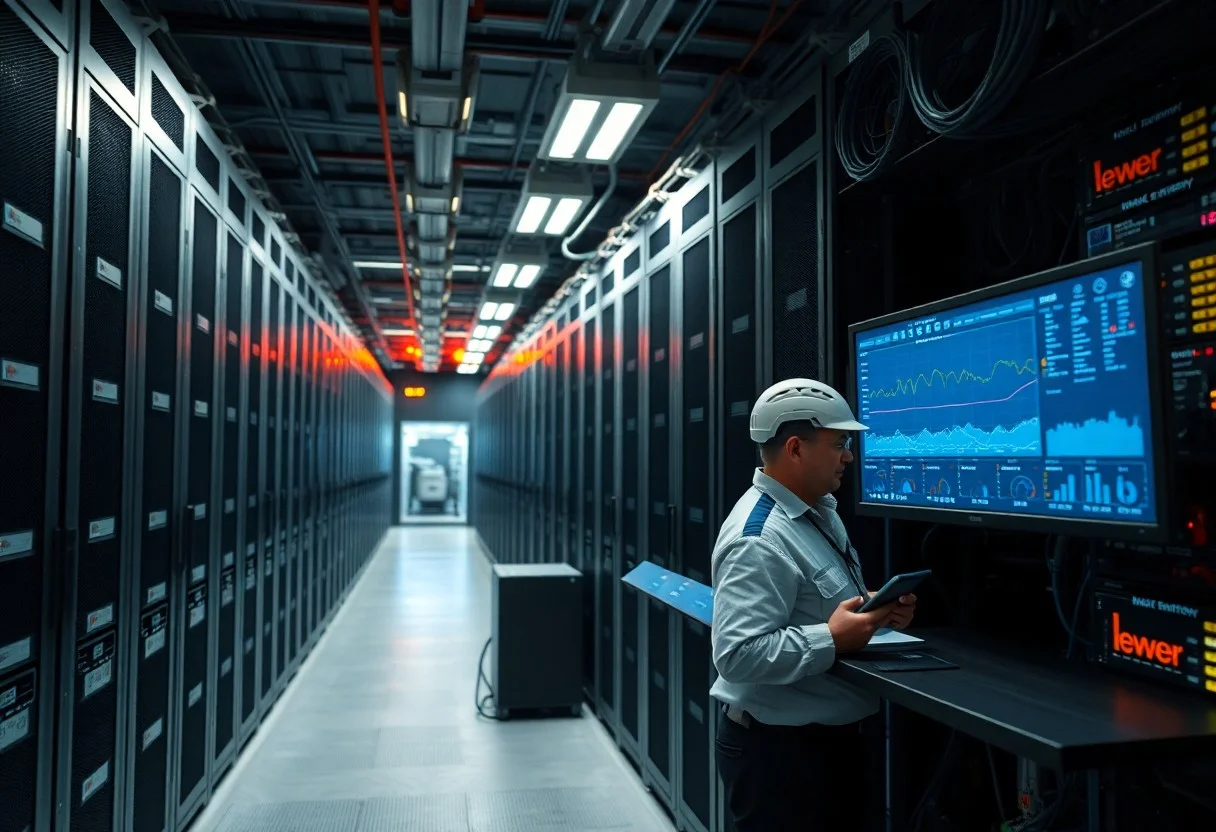
You favor VSFs for applications requiring fast, precise compensation-IGBT PWM topology with DC‑link capacitors delivers sub‑millisecond to few‑millisecond response depending on model. Typical deployments range from 50 kVA to several MVA, and VSFs are widely used in data centers, hospitals, and precision manufacturing where dynamic loads cause rapid harmonic fluctuations.
You can expect VSFs to use advanced control algorithms (p‑q, d‑q or adaptive filters) and modular designs; for example, a 1 MW VSF installation in a data center often drops THD from around 10% to below 3% and improves power factor, provided you size with 10-20% margin and coordinate tuning with upstream transformer impedance.
Assessing System Compatibility
You must verify voltage level, short-circuit capacity, and point of common coupling: aim for THD/TDD ≤5% at PCC per IEEE 519 and identify harmonic orders (commonly 5th and 7th) above that. Compare your system’s short-circuit ratio (SCR): SCR >20 is strong, 10-20 moderate, <10 weak; that determines whether an active harmonic filter or hybrid/detuned solution suits your site.
Electrical System Configuration
Map single-line diagrams, transformer ratings and impedances, breaker sizes, and any generators or UPS feeding the load. For example, a 480 V, 3‑phase, 600 A service supplied by a 1.5 MVA transformer with 5.75% impedance will present different resonance risks than a 4.16 kV plant; you must confirm grounding type and whether parallel transformers or long feeders alter harmonic propagation.
Equipment Interactions
Check how the filter will interact with VFDs, motor drives, capacitor banks and PLCs: active filters can inject compensating currents that upset poorly tuned capacitor banks or cause nuisance trips on sensitive drives. You should identify high‑harmonic sources (e.g., multiple 200-500 kW VFDs) and plan filter placement at the PCC or local panel to control propagation and avoid resonance with existing passive elements.
Perform a harmonic impedance scan and phase-by-phase current analysis before final selection: measure harmonic spectra during peak and light loads, size the AHF to cover the dominant harmonic currents (often up to 100% of measured harmonic current), and verify dynamic response (typical AHF response <1 ms). A food‑processing case reduced THD from 12% to 2.5% by installing an AHF at the PCC and retuning capacitor banks, illustrating the importance of placement, communication (Modbus/Profibus) and coordination with protection settings.
Evaluating Filter Performance
You should quantify filter performance by measuring THD, individual harmonic orders, and TDD under realistic load profiles (25%, 50%, 75%, 100%). Use IEEE 519 as a benchmark and verify steady-state and transient behavior with spectrum analyzers and power loggers. Also check thermal performance, derating curves, and long-term stability through 24-72 hour endurance tests to confirm reliable operation in your environment.
Effectiveness in Harmonic Mitigation
Measure before-and-after harmonic spectra to confirm the AHF reduces THD to target levels (often <5%) and attenuates dominant orders-e.g., 5th and 7th-by 20-40 dB. In one case study a 400 A AHF cut system THD from 12% to 3% and lowered neutral currents by 60%, demonstrating how you can validate both compliance and reduced component stress.
Dynamic Response Characteristics
Assess response time, typically sub-millisecond to a few milliseconds, and the filter’s ability to track load steps from VFDs or inrush events; switching frequencies of 2-10 kHz affect bandwidth. Ensure your tests include fast step changes and harmonics up to the detection bandwidth to verify the controller maintains attenuation during transients.
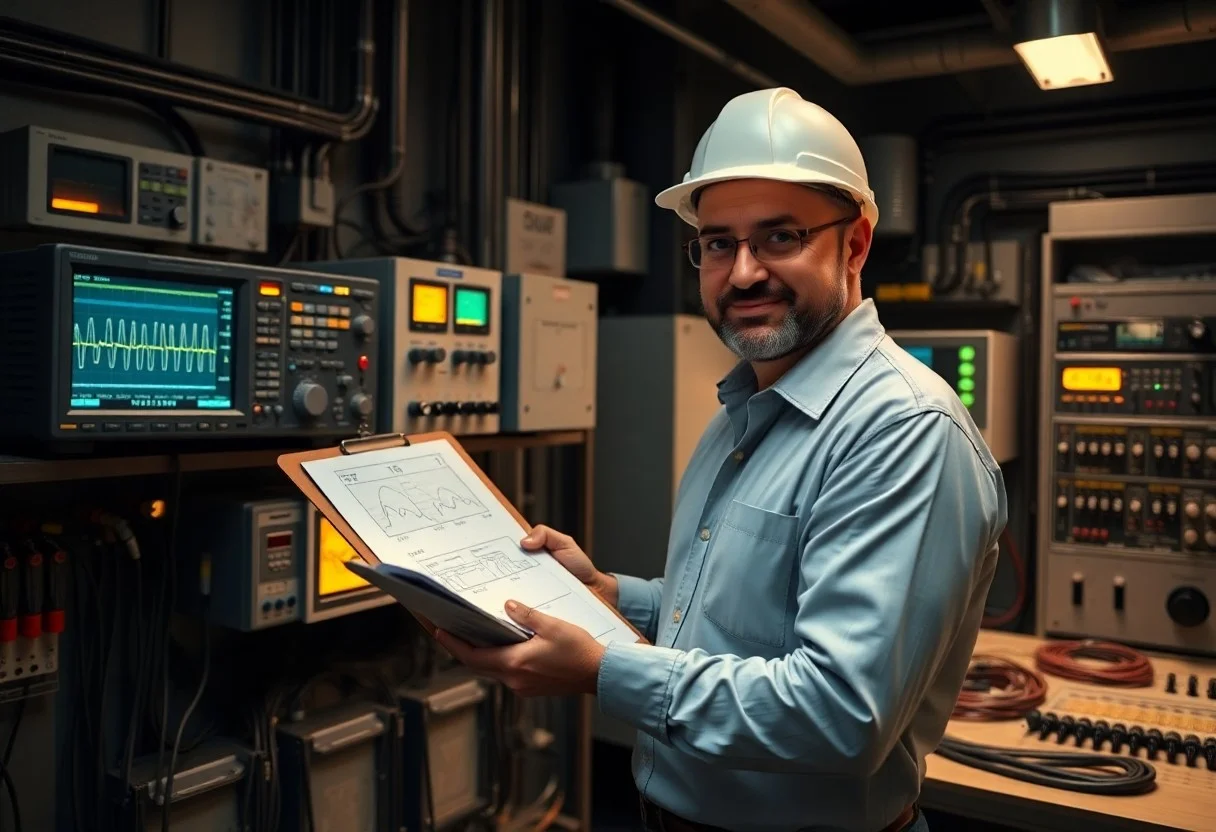
Delve deeper into response by running step-change tests (e.g., 30% load step) while capturing waveform and spectral data: you want an AHF that corrects major harmonics within 1-10 ms without inducing resonance. Evaluate the control algorithm (adaptive vs. fixed-tap), measurement bandwidth (Rogowski coils offer wide bandwidth, Hall sensors lower cost), and the trade-off between higher switching frequency (better tracking, more EMI and switching losses) versus thermal limits and EMI mitigation cost. Validate on-site with oscilloscope captures and harmonic analyzers under representative VFD patterns to ensure the filter’s dynamic behavior preserves motor life and avoids nuisance tripping in your installation.
Cost-Benefit Analysis
Balance upfront AHF cost against avoided outages, utility penalties and equipment replacement: units range roughly $10,000-$100,000 depending on kVA and topology, while IEEE 519 compliance can prevent expensive voltage/current distortion fines; in heavy-harmonic facilities you’ll often see payback within 12-36 months due to reduced motor failures, lower transformer losses and fewer production interruptions.
Initial Investment vs. Long-term Savings
A 500 kVA AHF might cost $15,000-$50,000, but you should quantify savings from improved power factor, lower I2R losses and extended capacitor/motor life; for example, cutting harmonic-related downtime by 20-40% can translate to tens of thousands saved annually, pushing ROI into a 1-3 year window in many manufacturing plants.
Maintenance and Operational Considerations
Plan for firmware updates, periodic retuning and cooling-system upkeep: annual inspections plus remote monitoring reduce manual checks and can lower on-site visits by 50-70%, while basic preventative maintenance typically accounts for 1-3% of capital per year; you’ll want SLAs that include rapid replacement of power modules and access to firmware patches.
Maintain a small spares kit (one power module, one cooling fan, spare fuses) and schedule a full service every 3-5 years; typical AHF MTBFs exceed 50,000 hours, but vendor service contracts (commonly 3-6% of CAPEX annually) and one or two days of operator training help you minimize Mean Time To Repair and avoid extended downtime.
To wrap up
As a reminder, follow the seven steps-assess system harmonics, define performance targets, verify compatibility, size the AHF, prioritize response time, plan integration and maintenance, and validate with testing-so you select an active harmonic filter that ensures stable, efficient operation. By focusing on measurement-driven selection, compliance, and lifecycle support, you reduce downtime and protect equipment while optimizing power quality for your facility.
FAQ
Q: What are the seven necessary steps to choose the right active harmonic filter for reliable operations?
A: 1) Measure the plant harmonic profile under representative load conditions (steady-state and dynamic). 2) Define performance targets and compliance limits (e.g., IEEE 519, IEC 61000-3-6) including THD and individual harmonic limits. 3) Calculate required filtering capacity and dynamic range based on worst-case load currents, harmonic orders, and expected future loading. 4) Select appropriate filter topology and technology (shunt active filter, multi-pulse converter, hybrid passive/active) that meets response time, bandwidth, and harmonic order requirements. 5) Verify electrical compatibility with system impedance, resonance points and grounding arrangements. 6) Plan installation, control integration, and protection coordination including CT/VT placement and communications. 7) Commission, tune using measured data, and establish monitoring, maintenance and vendor support plans to sustain reliability.
Q: How do I size and specify the filter capacity and performance parameters?
A: Start with accurate harmonic measurements to determine load current, THD, and dominant harmonic orders. Specify the filter’s nominal voltage, continuous current rating, peak current capability, and KVAR or compensated current per phase. Require dynamic response metrics: response time, control bandwidth, and attenuation across target harmonic orders (e.g., 5th-50th). Include overload capability for short-duration events, allowable ambient conditions, cooling needs, harmonic injection limits, measurement accuracy, and communication interfaces. Add derating margin for future load growth and require factory tests or performance curves showing harmonic attenuation vs. load.
Q: What compatibility and interaction checks are necessary before selecting a filter?
A: Evaluate system short-circuit impedance and perform harmonic impedance scans to identify resonance risks and potential amplification of specific orders. Check neutral and grounding arrangements to ensure the filter can handle neutral currents if required. Confirm compatibility with existing passive filters, drives, UPS, and generator sets to avoid harmonic interactions. Verify coordination with protection relays, switching devices, and PLC/SCADA protocols. Ensure CT/VT placements support accurate measurement and consider parallel operation requirements if multiple filters are needed.
Q: What are the key installation and commissioning best practices for reliable operation?
A: Prepare the site for proper ventilation, rated clearances, and cable routing. Install CTs with correct orientation and secondary grounding; verify earthing connections. Connect control and communication links and ensure isolation and surge protection where needed. Commission in stages: validate device configuration, run no-load and incremental load tests, tune control parameters to measured harmonic spectra, and verify response to transient and dynamic loading. Perform acceptance tests comparing pre- and post-installation THD and individual harmonic reductions. Document settings and provide operator training.
Q: What maintenance, monitoring, and procurement criteria ensure long-term reliability and support?
A: Specify remote monitoring and real-time reporting of THD, individual harmonics, filter current, alarms and event logs. Require firmware update capability, clear diagnostic indicators, and secure communications. Define preventive maintenance tasks (fan/filter cleaning, electrical connection torque checks, capacitor/semiconductor inspections) and recommended intervals. Procure from vendors offering warranties, local technical support, spare parts, and service contracts including response time SLAs. Ask for references, factory acceptance tests, compliance certificates, and lifecycle cost estimates including MTTR and spare inventory recommendations.
Tagged Filter, Reliability, Selection