


Most outages are avoidable when you proactively assess and fortify your power systems: implement redundant UPS and generators, conduct regular maintenance and testing, monitor load and environmental conditions in real time, enforce strict change-control and vendor management, and train staff in emergency procedures so your facility withstands faults before they escalate.
Key Takeaways:
- Design redundant power paths (N+1 or 2N), dual utility feeds, and parallel UPS to remove single points of failure.
- Implement regular maintenance and lifecycle replacement for UPS batteries and generators, including load-bank testing and fuel management.
- Use real-time power monitoring and predictive analytics to detect anomalies, forecast capacity issues, and trigger automated alerts.
- Maintain documented procedures, vendor SLAs, and a stocked spare-parts inventory to enable quick repairs and component swaps.
- Run scheduled failover drills and outage simulations with trained staff to validate recovery plans and response times.

Understanding Power Failure Risks
You face multiple exposure points: utility grid outages, transformer and switchgear faults, UPS battery degradation, generator failures, and human error. UPS runtimes that start at 10-20 minutes can drop under 5 minutes as batteries age, narrowing the window for a successful generator transfer. Asset mapping, runtime testing, and identifying single points of failure reveal where a local fault could cascade into a total power loss.
Common Causes of Power Failures
Utility interruptions and upstream transformer failures often initiate outages, while internal causes like UPS cell failure, ATS malfunction, and generator maintenance lapses follow. You also encounter human errors during maintenance bypasses, misconfigured PDUs that overload circuits, and environmental events-storms or flooding-that damage external infrastructure. Historic incidents commonly involve two or more of these factors interacting rather than a single isolated fault.
Impact on Data Center Operations
An outage degrades availability, risks data corruption, and triggers SLA penalties. Gartner estimates downtime can cost about $5,600 per minute; you would lose roughly $336,000 in an hour and $504,000 in 90 minutes. Power irregularities also accelerate hardware wear, cause unexpected reboots, and complicate recovery and forensic analysis.
You also face cascading technical and business consequences: cooling failures within minutes raise rack inlet temperatures, forcing throttling or shutdowns; incomplete write operations risk database rollbacks and extended recovery times. Generators that fail to accept full load can cause repeated ATS cycling, shortening equipment life. Operationally, you incur emergency labor, SLA credits, potential regulatory fines, and customer churn unless you routinely test transfers and monitor thermal and electrical parameters.
Step 1: Assess Current Power Infrastructure
You should map single-line diagrams, inventory UPS units, generators, PDUs and ATS devices, and verify redundancy levels (N, N+1, 2N). Measure per-rack load – typical enterprise racks draw 3-8 kW while HPC racks hit 10-20 kW – and compare to breaker and busbar ratings. Also document battery ages, generator runtime, maintenance history and PUE to establish baselines for capacity planning and targeted upgrades.
Conducting a Power Audit
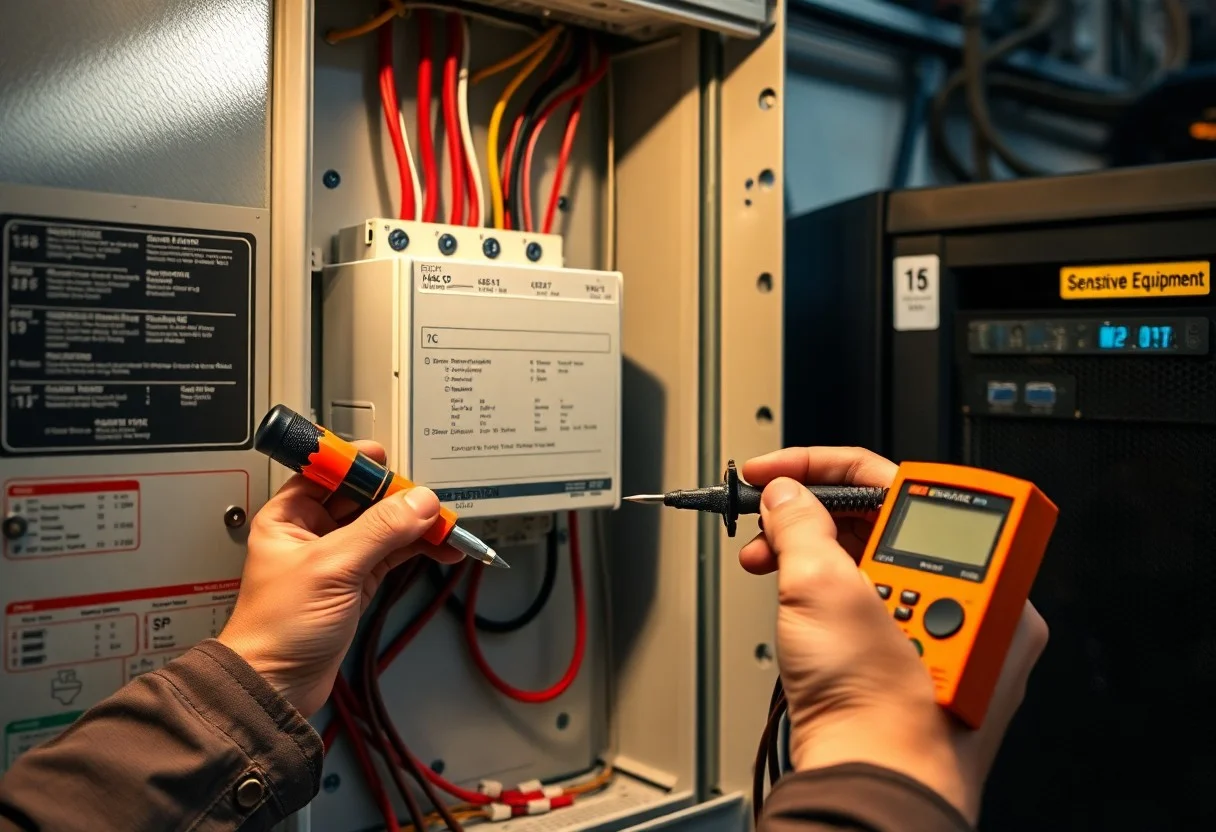
Start by meter-reading each UPS input/output, PDU branch, and main feeders under peak and average conditions; use thermal imaging to spot hot connections. Perform battery capacity tests and a generator load-bank run (at least annually, quarterly if you’re at >5 MW). Validate ATS transfer times versus UPS runtime-if generator stabilization exceeds UPS runtime, you need adjustments or extended battery capacity.
Identifying Vulnerabilities
Flag single points of failure such as single-feed PDUs, shared busbars, or one ATS serving multiple pods, and note overloaded breakers operating above 80% continuous load. Replace batteries older than 4-5 years, and treat generator auto-start delays over 30-60 seconds as high risk. Log firmware mismatches and undocumented cable splices that can cause latent faults during switchover.
Dive deeper into load imbalance, harmonic distortion and environmental stressors: unbalanced phases can derate transformers by 10-20%, high ambient temperatures shorten battery life by roughly 50% per 10°C rise, and dust buildup raises connector resistance. You should correlate maintenance logs with incident timestamps to find recurring weak links, and run scenario tests (single-breaker trip, ATS fail, diesel failover) to quantify mean time to recovery for each failure mode.
Step 2: Implement Redundancy Measures
Implement layered redundancy across power paths: dual utility feeds, A/B bus architectures, redundant UPS strings, automatic transfer switches (ATS) and parallel generators. Use Tier guidance-Tier III targets 99.982% availability (~1.6 hours downtime/year) and Tier IV 99.995% (~26 minutes/year)-to set your design goals. Test switchover procedures quarterly and conduct annual full-load generator and load-bank tests so you validate failover under realistic conditions.
N+1 Redundancy Model
Adopt N+1 so you have one extra capacity unit beyond what your load requires; for example, three 50 kW UPS modules for a 100 kW load gives N+1. You can perform hot maintenance or replace a failed module without interrupting services, and this model scales: use N+2 for higher resilience or move to 2N when you need independent mirrored systems.
Backup Power Solutions
Combine UPS and generator strategies: UPS provides short-ride-through (commonly 5-15 minutes) to cover generator start, while diesel or natural-gas gensets supply sustained power; choose lithium-ion UPS batteries to reduce footprint by up to 40% and extend service life to ~10 years versus VRLA’s 3-5 years. Integrate static transfer switches (STS) and automated paralleling switchgear for seamless handoff under peak or fault conditions.
Plan fuel and testing rigorously: provision 24-72 hours of onsite diesel with vendor refueling contracts, perform monthly 15-30 minute loaded generator exercises and an annual full-load (4+ hour) run, and schedule periodic load-bank tests to reveal thermal or control issues. Remote telemetry for fuel-level, battery health and generator diagnostics lets you catch degradation before it impacts uptime.
Step 3: Regular Maintenance and Testing
Maintain a regimented maintenance calendar using NFPA 70B and TIA‑942 guidance: monthly visual checks, quarterly infrared thermography, annual oil and vibration analysis, and UPS battery replacements every 3-5 years per IEEE recommendations. You should log work orders, track MTTR/MTBF, and apply firmware patches promptly; this reduces silent degradations that often precede outages and keeps SLA targets achievable.
Scheduled Maintenance Protocols
Create SOPs with clear intervals: daily environmental scans, monthly breaker trip and alarm verification, quarterly torque and connection inspections, and annual full-generator service. You can use checklists tied to asset tags and CMMS entries so vendors and staff follow identical steps; many operators cut unexpected failures by over 50% after enforcing such protocols.
Testing Backup Systems
Test UPS and ATS transfer times to ensure UPS switchover under 10 ms and run ATS cycle tests monthly. You should exercise generators weekly (start and run) and perform load‑bank testing quarterly or annually at 25-50% for 1-2 hours, with a documented failover drill to validate operational readiness under load.
Dig deeper into battery and fuel measures: perform impedance or conductance tests quarterly per IEEE 1188/450, schedule VRLA replacements at 3-5 years, and run oil analysis every ~250 engine hours. You should also maintain fuel polishing records, verify automatic transfer sequence timing, and stream telemetry (SNMP/Modbus) to detect trends before they escalate.
Step 4: Monitor Power Usage Effectiveness (PUE)
Continuous PUE monitoring lets you detect efficiency drift before it becomes an outage risk; many operators target PUE ≤1.3 while averages hover around 1.5-1.7, so even a 0.05 rise can signal waste from cooling or UPS losses. You should baseline PUE by load band, correlate anomalies with maintenance or weather, and consult analyses like Outsmarting Data Center Outage Risks in 2026 for trend-based mitigation strategies.
Importance of PUE Monitoring
When you track PUE continuously, you gain early warning of system imbalance: a sudden PUE spike often maps to failed CRAC units, inefficient UPS bypass events, or unexpected airflow recirculation. Setting alerts for deviations of 0.05-0.10 helps you act within hours, and correlating PUE with IT load and ambient conditions pinpoints whether to tune cooling setpoints, rebalance loads, or service power gear to avoid progressive failures.
Tools and Technologies for Monitoring
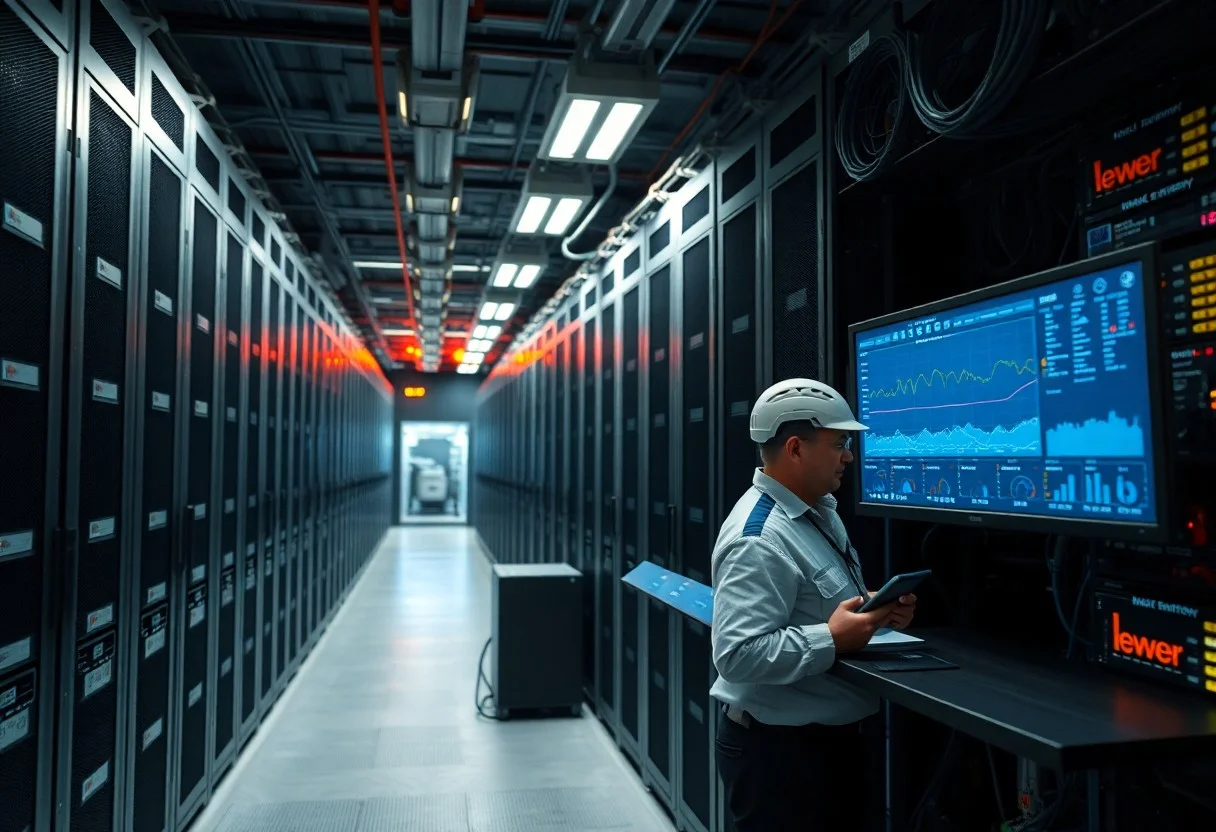
Use a combination of DCIM platforms, smart PDUs, rack-level submeters and BMS integration to compute PUE in real time; vendors like Sunbird, Schneider Electric EcoStruxure, Vertiv Environet and Nlyte offer APIs for analytics. You should deploy metering at the utility entrance, UPS output and PDUs, sample at 1‑minute or faster for trending, and feed data into dashboards and alert engines to catch sub-1% power anomalies.
Install calibrated IEC-class meters at the mains, UPS outputs and PDUs and aggregate that telemetry into your DCIM; sampling at 1s-60s granularity captures transients from UPS transfers and generator tests. Integrate power data with temperature and humidity sensors so you can correlate a 3-5% PUE shift with specific CRAC cycles or a failing fan tray. Apply ML-based anomaly detection to reduce false positives-Google’s AI work cut cooling energy by up to 40% in some sites-while planning meter deployments for an expected ROI often realized within 12-24 months when PUE improves by ~0.05-0.10 and energy rates exceed $0.08-$0.12/kWh.
Step 5: Staff Training and Preparedness
You must ensure operations staff can identify and resolve power faults immediately; cross-train technicians on UPS, ATS, generator, and PDU procedures, store concise runbooks in the control room, and maintain a 24/7 on-call roster. Aim for 100% of on-shift personnel to complete baseline power-system training and a competency check every 12 months so someone certified is always present during shift changes.
Training Programs for Staff
You should run quarterly hands-on drills and annual classroom refreshers, include vendor labs (APC, Schneider, Cummins) and live transfer tests under load. Use role-based competency checklists, require certification with up to two retake attempts, and log training hours-target roughly 16 hours per technician per year to keep skills current and measurable.
Incident Response Plans
You need documented playbooks with RTO and RPO targets-aim for RTO under 15 minutes for critical systems-and a clear escalation matrix assigning operator, engineer, facilities, and communications roles. Pre-authorize generator starts, maintain a live contact list, and test the plan quarterly via tabletop and functional drills while tracking MTTR and after-action items.
Detailed runbooks must include step-by-step checks: isolate the failing PDU, switch affected racks to alternate feeds, engage UPS bypass safely, and verify ATS position plus generator voltage and frequency. You should perform no-load automatic generator starts monthly and load-bank tests quarterly to validate full-load transfers and start-times under 30 seconds. Include lockout/tagout procedures, prewritten customer and stakeholder messages, and require a root-cause analysis with playbook updates within 7 days.
Summing up
Following this, you can safeguard your data center by implementing the six steps: assess and harden power infrastructure, deploy redundant UPS/generators, establish predictive maintenance and monitoring, enforce strict change control, test failover regularly, and train your staff for rapid response, so you reduce outage risk, maintain uptime, and ensure recovery capability under any power event.
FAQ
Q: What are the six preventive steps to prevent power failure in data centers before it happens?
A: 1) Design for redundancy – implement appropriate topologies (N+1, N+N, 2N) and dual distribution paths to eliminate single points of failure. 2) Maintain UPS and generator systems – schedule inspections, battery testing/replacement, and regular load-bank and automatic transfer switch (ATS) tests. 3) Continuous monitoring and predictive analytics – deploy PDUs, submetering, thermal imaging, and anomaly detection to spot degradation early. 4) Capacity planning and load testing – perform realistic load tests, balance phases, and maintain headroom for growth and failover scenarios. 5) Environmental and physical controls – ensure adequate cooling, airflow management, fire suppression, and proper grounding/cable routing to prevent electrical stress. 6) Operational discipline – enforce change control, maintenance procedures, spare parts inventory, and staff training so interventions don’t introduce risk.
Q: How often should UPS and backup generators be tested and serviced to maximize reliability?
A: Establish a tiered schedule: weekly visual and status checks for UPS/generator alarms; monthly UPS self-tests and generator start/exercise under no-load conditions; quarterly battery health checks (conductance/impedance) and fuel condition inspections; semi-annual ATS and transfer function verification; and annual full-load generator tests or load-bank runs. Replace VRLA batteries per manufacturer life expectancy or sooner if tests indicate degradation. Keep detailed logs, automated alerts, and vendor service contracts aligned to these intervals.
Q: What monitoring and predictive practices detect issues before they cause outages?
A: Implement real-time electrical monitoring at utility feed, switchgear, PDU, and rack level for voltage, current, power factor, harmonics, and circuit temperature. Integrate sensors for ambient temperature, humidity, and leak detection. Use trend analysis and machine-learning anomaly detection to flag abnormal drift (rising resistance, repeated transfer events, thermal hotspots). Schedule periodic thermal-imaging and infrared inspections, and feed findings into a CMMS/DCIM to trigger preventive work orders and lifetime forecasts for batteries and components.
Q: Which power distribution and redundancy topologies reduce the chance of a catastrophic outage?
A: Choose architectures that match your availability needs: N+1 for basic redundancy, 2N for fully independent duplication, or distributed A/B bus power to each rack so equipment is dual-corded across separate UPS lines. Use diverse utility feeds where possible, separate electrical rooms or switchgear, paralleling UPS with automatic failover, and static/maintenance bypasses for service without interruption. Ensure ATS, breakers, and transfer schemes are rated and tested to handle switchovers without exceeding equipment inrush or thermal limits.
Q: What operational controls and procedures minimize human error and equipment-induced failures?
A: Enforce strict change-control with documented approvals, pre- and post-change checklists, and rollback plans. Require LOTO (lockout-tagout) during electrical work and provide certified training for staff and contractors. Maintain accurate as-built diagrams, label cabling and circuits, and restrict access to critical power areas. Keep a validated spare parts kit (batteries, fuses, breakers, relay modules) and vendor escalation paths. Conduct regular audits, tabletop failure drills, and post-incident root-cause analyses to continuously improve procedures.